-
-
Iowa Parents Are Not Responsible for Ordinary Risks of Life
I learned from my colleague Tom Rawlings’ Substack that a recent opinion from the Iowa Supreme Court takes a new look at the issue of parents’ leaving children unsupervised. Paula Cole went shopping, taking her infant with her and leaving her five other children, ranging in age from 5 to 12, home asleep. Predictably, two…
-
-
-
-
-
Four Ground Rules for Avoiding Parents’ Custody Disputes
The start of the school always brings competing demands from parents involved in ongoing custody disputes. Schools can get caught in the middle when parents bring those disputes into the school. Now is a good time to establish some ground rules with your parents that may help you avoid becoming part of the drama. Get…
-
Pedophiles Are Not the Greatest Risk that Youth Organizations Face
We have seen a tendency for youth-servicing organizations (YSOs) to concentrate all of their efforts on preventing sexual predators from entering the organization. While hardening your organization against pedophiles is an important goal, placing too much emphasis there can distract from other equally important concerns. First, there is no foolproof way to “detect” sexual predators….
-
Therapies that Try to Uncover Memories of Abuse May be Counterproductive
One long-running controversy in treatment of people who have suffered from childhood abuse is whether and how much to delve into their memories of the abuse. In a recent study, researchers uncovered indications that people who don’t remember abuse, or at lest don’t report it to interviewers, have better mental health than those who do….
-
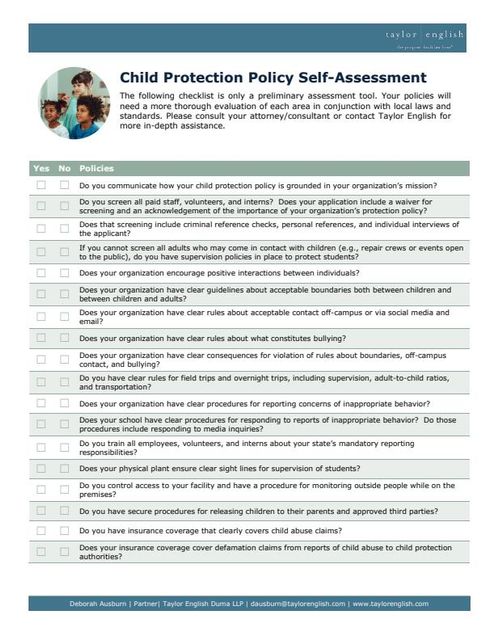
The Most Common Mistake in Child Protection Policies
As we work with youth organizations to draft good child protection policies, we see three very common misconceptions. Youth-serving organizations genuinely care about protecting children, but they often unwittingly leave opportunities for maltreatment. The most common mistake we see is simply adopting someone else’s policy. Our advise is to adapt, not adopt, other policies. “We…
About This Blog
Youth-serving organizations take on a serious responsibility when they open their doors to children and other vulnerable people. Fulfilling that responsibility well requires two things working together: a safety culture strong enough to prevent harm, and independent investigations credible enough to find the truth when someone alleges mistreatment.
Youth Services Law covers both. Posts examine the legal landscape, practical decisions, and organizational choices that shape how schools, camps, churches, colleges, faith-based groups, and community organizations protect the people in their care and respond when something goes wrong. The goal is the same in every post: precise, useful guidance for child protection and investigations.
About the Author
DA
Debbie Ausburn
30+ years as social worker, foster parent, criminal prosecutor, and civil trial attorney. Cases argued before the U.S. Supreme Court.
Author, Raising Other People's Children (2021)
Co-author, Protecting Other People's Children (2024)
Co-author, Protecting Other People's Children (2024)
Chalmers, Adams, Backer & Wallen, LLC
Woodstock, Georgia
Woodstock, Georgia
Featured Post
When the Two-Adult Rule Doesn’t Work for Your Organization, and What to Do Instead
September 8, 2026
Every plaintiff's attorney in a youth sexual abuse case asks the same question: did the organization follow accepted safety practices? Many organizations assume the answer required two adults present at every activity. That assumption does not hold up under scrutiny. No universal legal standard...
Read the full post ›